
Shipping costs for custom packaging boxes have become one of the biggest pressure points for e-commerce brands, especially when moving products from manufacturing hubs in cross-border transportation to customers. In many cases, packaging-related freight charges now account for 15% to 30% of total landed cost, making packaging box design a far more important decision than many buyers realize.
While fuel surcharges, peak-season fees, and carrier rate increases are largely outside your control, your packaging box structure is not. The size, weight, and format of your custom box directly influence dimensional weight (DIM weight), pallet efficiency, and the number of units that fit into each shipment. Even a small reduction in carton size can create meaningful savings when scaled across hundreds or thousands of orders.
We’ve seen clients reduce shipping expenses by 8% to 20% simply by redesigning their packaging boxes without sacrificing protection or presentation. In some cases, lowering box height by just 1–2 inches was enough to move parcels into a cheaper freight bracket.
At a glance: 5 cost‑saving strategies
| Strategy | Key Benefit | Typical Cost Reduction |
| Knock‑down / Flat pack structures | Shrinks storage & shipping volume by up to 80% | 40–60% lower volume weight |
| Remove unnecessary box inserts | Cuts weight and material waste | 15–30% weight reduction |
| Use lighter but stronger board | Reduces actual weight while maintaining strength | 10–20% material & freight cost |
| Eliminate extra master cartons | Removes an entire layer of packaging | 5–15% total shipping volume |
| Optimise dimensions for DIM weight | Avoids oversized surcharges | 20–50% lower DIM weight charges |
1.Use Knock-down / Flat Pack Structures
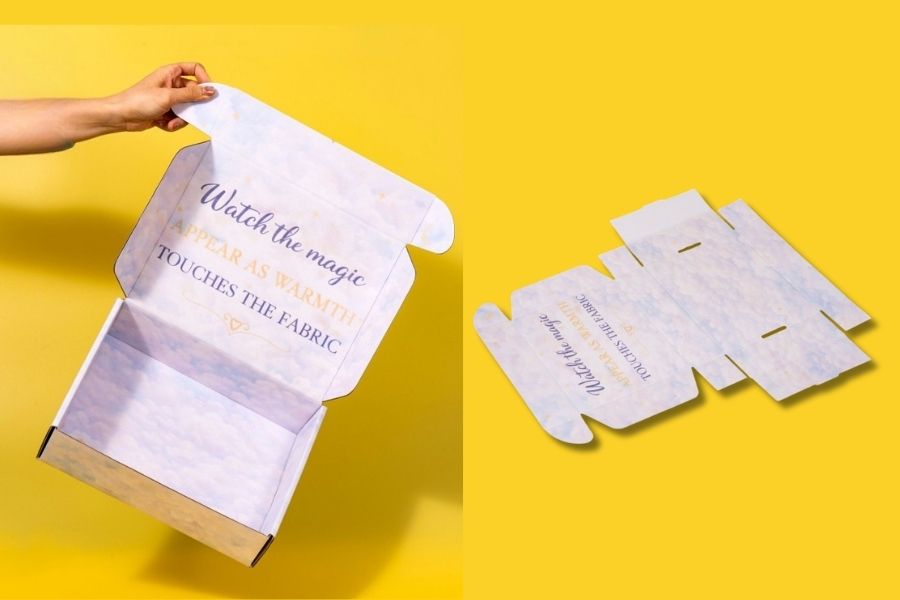
Many standard packaging boxes are shipped fully assembled, which means brands are often paying to transport empty space. For products with regular reorder volumes, this can quietly add high cost over time. A more efficient solution is the knock-down (KD) or flat pack box design.
Instead of shipping in a rigid, erected form, the box is supplied flat as a pre-scored sheet. It can then be folded into shape quickly at the destination, often in seconds, with no glue or tape required, depending on the structure. This makes handling easier while reducing storage space before use. Flat pack packaging can reduce shipping volume by 80% to 90% compared with the same box shipped assembled. Since most freight carriers charge based on actual weight or dimensional weight (whichever is higher), lowering carton volume can create immediate savings.
For LCL and FCL shipments, flat-packed cartons also improve container loading efficiency. More units fit into each shipment, which often lowers the landed cost per unit and reduces the need for frequent reorders. For buyers shipping to Europe or the United States, this can make a noticeable difference across annual purchasing volumes.
If your current box packaging arrives pre-assembled, it may be worth reviewing whether a KD structure is possible. In many cases, the visual appearance remains the same, while logistics costs improve significantly.
2.Remove Unnecessary Inserts
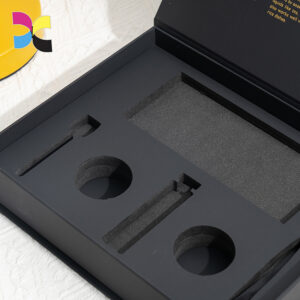
It’s tempting to over‑engineer packaging with multiple inserts, trays, or die‑cut dividers. But many products don’t need them.
What to eliminate:
- Foam or plastic corner blocks (if the outer box already provides cushioning)
- Separate paperboard trays (use the box’s own flaps as support)
- Extra “product display” inserts that add no structural value
Real‑world impact: Removing a single paperboard insert from a medium‑sized packaging box can cut 20–50 g of weight. For an order of 10,000 units, that’s 200–500 kg less — a noticeable deduction on any air or sea freight invoice.
Before removing any protective component, always carry out a drop test or transit test. If the product passes common shipping standards such as ISTA, FedEx, or Amazon handling requirements, you can move forward with much more confidence.
3.Use Lighter but Stronger Corrugated Board
Many brands assume that thicker cardboard automatically means better protection. In practice, that is not always the case. Modern corrugated materials can deliver strong compression performance and transit protection at lower basis weights, which means you may be paying for extra board that your product does not actually need.
For e-commerce brands shipping at scale, even a small reduction in board weight can lower both packaging cost and freight charges.
A smarter approach is to focus on material performance rather than thickness alone. Options worth discussing include:
- Higher-performance flute profiles – Structures such as B-flute or micro-flute can provide good rigidity while using less material than standard, heavier flute combinations.
- Stronger liner papers at lower gsm – For example, a 150 g/m² kraft or recycled liner with improved burst strength may perform better than a standard 250 g/m² liner that lacks strength enhancements.
- Downgrading over-specified double-wall cartons – Some boxes are designed with double-wall board when a properly engineered single-wall structure would be sufficient.
Reducing board weight from 400 gsm to 300 gsm can lower material cost by approximately 15% to 20%. In many cases, shipment weight falls by a similar margin, creating a second layer of savings through reduced freight cost.
If you move to a lighter material, make sure the board still meets your required performance and sustainability standards. Certifications such as FSC or PEFC are especially valuable for brands selling into Europe, where eco-credentials often influence purchasing decisions. We’ve worked with clients who kept the same outer dimensions and visual appearance, yet reduced annual packaging spend simply by re-engineering the board specification.
4.Eliminate Extra Master Cartons
A common shipping method is to place individual retail boxes inside a larger brown master carton before palletising. In some supply chains, this makes sense. But if the retail packaging is already structurally strong enough, the outer master carton can become an unnecessary extra layer, adding material cost, shipment volume, and disposal waste.
For many brands, this is one of those costs that continues year after year simply because “it’s how it has always been done.” You may be able to ship retail boxes directly on pallets when the following conditions are met:
- Your retail packaging has sufficient compression strength – For example, a board grade with around 32 ECT or higher for heavier products.
- You are shipping palletised loads – Especially when using stretch wrap, corner boards, and edge protectors for stability.
- The product is relatively durable, Such as apparel, books, packaged dry goods, or other low-fragility items.
Removing one master carton for every 6 to 12 unit boxes can reduce overall shipping volume by approximately 10% to 15%, depending on pack format. It also removes the cost of the outer carton itself and reduces disposal handling for your customer in Europe or the United States.
For brands supplying European retailers, reducing unnecessary packaging layers can also support compliance goals under the Packaging and Packaging Waste Regulation (PPWR) and broader waste-reduction initiatives. Many buyers also appreciate the cleaner, more sustainable presentation with fewer layers of packaging.
5.Optimise Dimensions to Avoid DIM Weight Charges
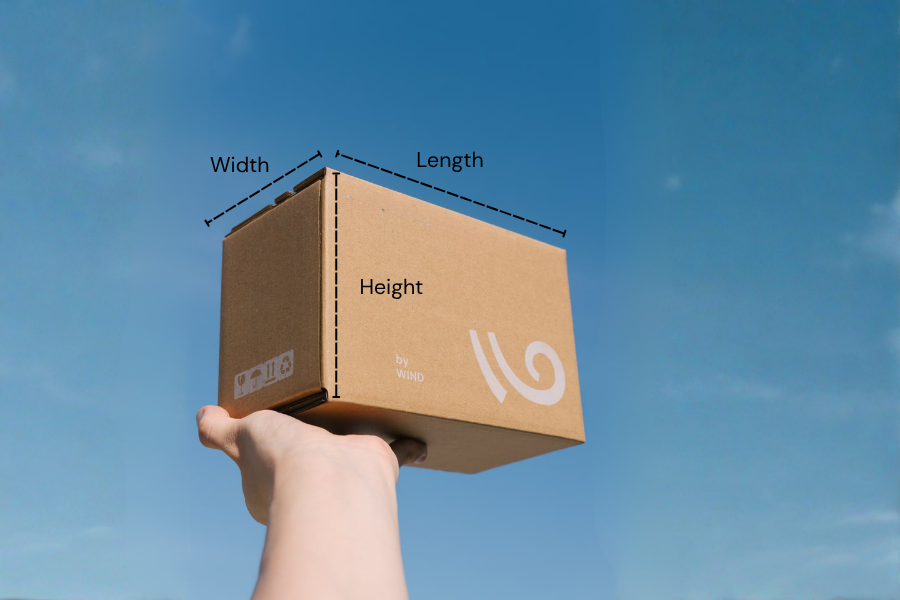
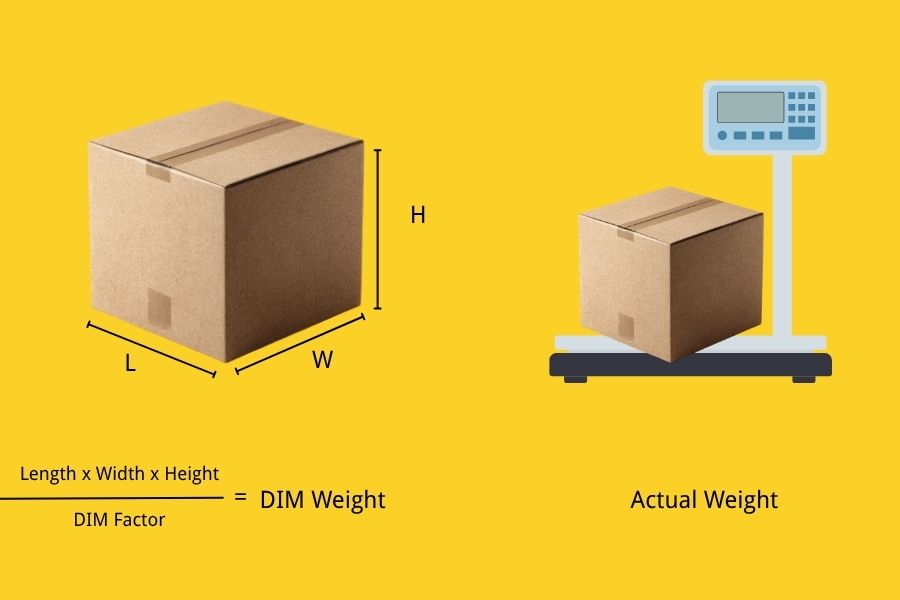
DIM weight (also called volumetric weight) is a carrier’s way of charging for the space a package occupies. The formula is standard across most carriers (FedEx, UPS, DHL, etc.):
DIM weight (kg) = Length × Width × Height (inches) ÷ DIM Factor
How to optimise:
Keep the longest side under 24 inches to avoid ‘oversized’ surcharges.
Aim for a cube‑like shape. The volume is the same , but the DIM weight is lower? Actually both have the same volume, but cube shapes reduce carrier ‘irregular package’ penalties. More importantly, they leave less wasted space on a pallet.
Round down to the nearest cm when measuring (carriers round up, so design your box to be 1‑2 mm under common thresholds like 24 inches).
| Dimensions (inches) | Volume (in³) | DIM weight (lb) | Result |
| 15 × 15 × 10 | 2,250 | 10.4 lb | Efficient |
| 30 × 7.5 × 10 | 2,250 | 10.4 lb | Higher risk of surcharge |
| 40 × 10 × 5 | 2,000 | 9.3 lb | Waste of space |
As shown above, the same volume can trigger extra fees simply because one dimension crosses a threshold.
Final checklist before your next production run
Before placing your next packaging order, it’s worth reviewing a few key details. Small adjustments made at this stage often create the biggest long-term savings once shipments begin.
- Request flat pack / knock-down samples from your packaging supplier and compare shipping efficiency against assembled boxes.
- Run drop tests after removing inserts or master cartons to confirm product protection is still reliable.
- Ask for lightweight, high-strength board alternatives that may lower both material and freight cost.
- Measure the box in both flat and assembled states to ensure no dimension pushes you into a higher freight bracket (for many routes, thresholds such as 60 cm can matter).
- Compare DIM weight quotations from multiple logistics providers across sea freight, air freight, and express services before finalising your box size.
Optimising your packaging box is not just about saving cardboard—it’s about reducing real cost on every shipment to Europe and the United States. A few centimetres less size or a few grams less weight may seem minor, but across thousands of units, the savings can be significant.
We often recommend starting with one or two practical changes, then measuring the per-unit landed cost before scaling further improvements. That way, decisions are based on results rather than guesswork.