
When planning to source luxury gift boxes in bulk, one question usually comes up very quickly:
Should you choose magnetic closure boxes or drawer gift boxes?
At first glance, both structures look premium. Both are widely used for cosmetics, jewelry, candles, electronics, and corporate gifting. But once you move beyond appearance, the differences become much more important, especially for B2B buyers managing packaging costs, shipping efficiency, and long-term brand positioning.
For example, rigid magnetic boxes can increase shipping volume by 20–40% compared with collapsible or more compact packaging structures, depending on box size and packing method. At the same time, many retail and DTC brands are now under pressure to improve packaging sustainability and reduce unnecessary material usage.
In this guide, we’ll compare magnetic closure gift boxes and drawer gift boxes from a real B2B sourcing perspective — including structure, printing cost, shipping impact, recyclability, and the best applications for each style, so you can make a smarter packaging decision before mass production begins.
Magnetic Closure vs Drawer Gift Boxes: Key Differences at a Glance
Both magnetic closure boxes and drawer gift boxes are widely used in premium packaging, but their performance differs significantly in terms of logistics, assembly complexity, branding potential, and recyclability.
| Feature | Magnetic Closure Gift Box | Drawer Gift Box |
| Opening mechanism | Hidden magnets snap lid to base | Inner tray slides out of outer sleeve |
| Unboxing experience | One‑piece lift‑off lid, “premium click” | Pull‑tab or ribbon, theatrical reveal |
| Rigidity | High – rigid board construction | Medium – depends on sleeve thickness |
| Assembly required | Usually none (pre‑assembled) | Often requires inserting tray into sleeve |
| Space efficiency (shipping) | Low – fixed 3D shape | High – can be shipped flat and assembled later |
| Typical applications | Jewelry, electronics, cosmetics, watches | Fine chocolates, apparel, subscription boxes, wine |
| Perceived luxury level | Very high | High, but slightly more “modern/rustic” |
| Reusability for customers | Excellent – keeps shape | Good – sleeve may loosen over time |
What Are Magnetic Closure Gift Boxes?

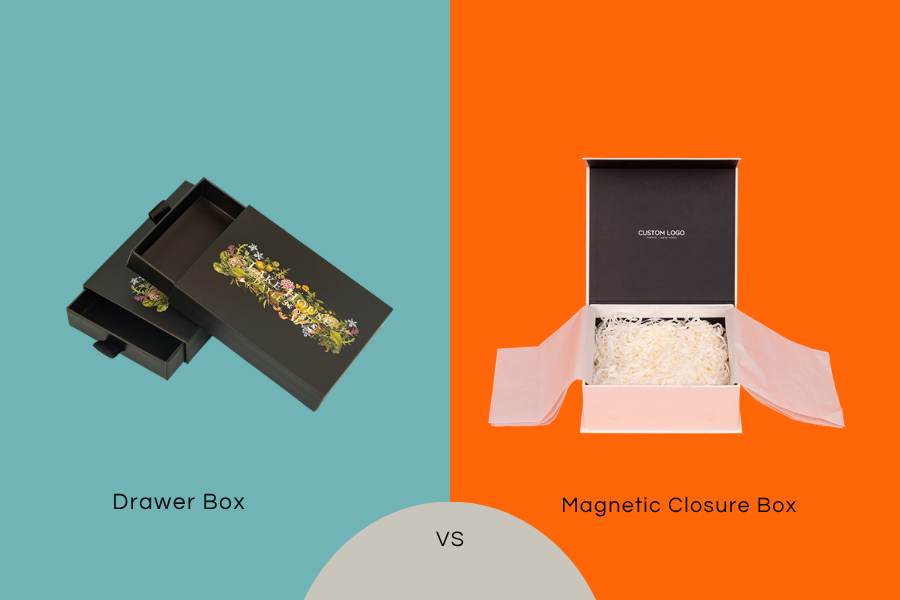
A magnetic closure gift box consists of two rigid parts: a deep base and a matching lid, with embedded magnets along the opening edges. When brought close, the magnets snap together firmly, creating a satisfying closure that signals quality. These boxes are almost always made from thick greyboard wrapped in decorative paper or leatherette.
Pros:
Superior perceived value – The magnetic “click” is universally associated with premium goods. Studies show that 67% of consumers rate magnetic boxes as “much more luxurious” than standard tuck‑top boxes.
Excellent product protection – The rigid structure and tight seal keep contents secure. Drop tests indicate magnetic boxes reduce damage claims by up to 40% compared to telescopic boxes.
Reusable and memorable – Many end‑users keep these boxes for storage, turning your packaging into a long‑term brand touchpoint.
Cons
Higher shipping costs – Because they are fully assembled and inflexible, magnetic boxes occupy more volume. For a 200×150×50 mm box, shipping 1,000 units via air freight can cost 35% more than flat‑pack alternatives.
More expensive to produce – Additional materials (magnets, thicker board) and assembly increase unit cost by roughly 0.80–0.80–2.50 per box depending on size.
Not ideal for heavy items – The magnetic seal is strong but not lockable. For products over 1.5 kg (e.g., a bottle of spirit), the lid may pop open during rough handling.
What Are Drawer Gift Boxes?
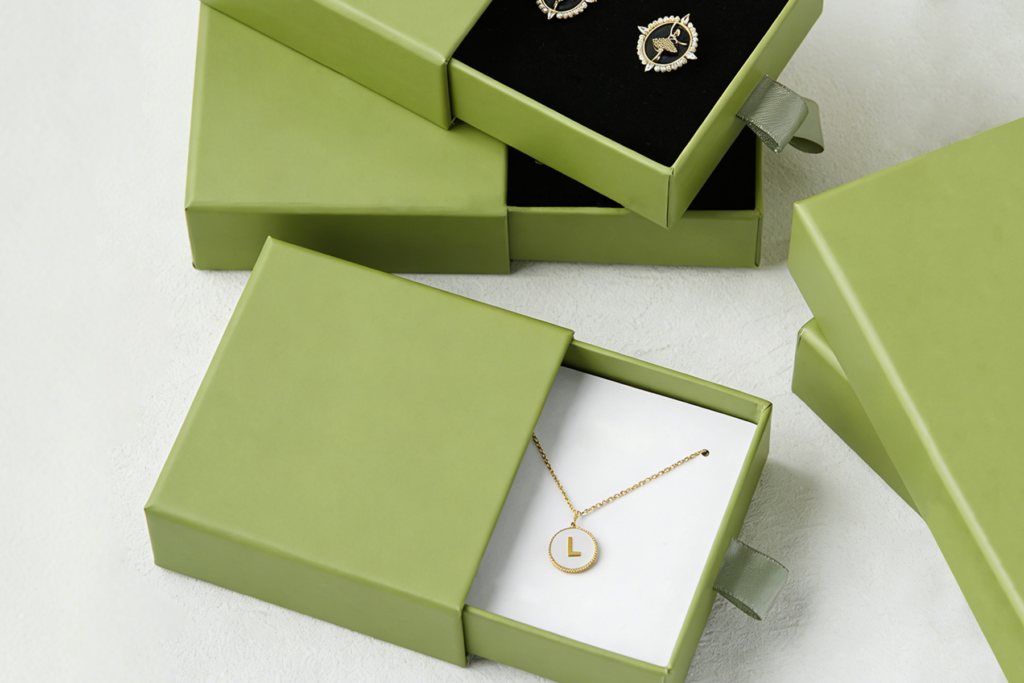
A drawer gift box is a two‑piece design: an outer sleeve and an inner tray that slides in and out. The tray often has a ribbon or cutout for easy pulling. Drawer boxes can be made from rigid board or folding carton stock, but premium versions use sturdy greyboard for both parts.
Pros:
- Flat‑ship capable – Sleeves and trays are shipped knocked down and assembled at your fulfillment center, reducing freight volume by 50–60%. For overseas orders, this can save thousands of dollars per container.
- Unique reveal – The sliding motion creates a ceremony that works especially well for elongated items (e.g., cufflinks, pens, chocolate bars).
- Better for automated packing – The open top of the tray allows robotic or manual insertion without fighting a lid. Some B2B customers report 20% faster pack‑out speeds with drawer boxes.
Cons
Sleeve loosens over time – After repeated opening, the friction fit may weaken. In quality tests, rigid drawer boxes typically maintain good tension for 50–80 cycles, while magnetic boxes show no change after 200+ cycles.
Lower perceived rigidity – Without a full enclosure, drawer boxes feel slightly less substantial. A 2023 survey of luxury buyers found that only 48% rated drawer boxes as “very premium,” versus 82% for magnetic boxes.
Requires precise tolerances – If the sleeve is too tight, the tray sticks; too loose, it falls out during transit. Manufacturing defects are more common (3–5% reject rates versus 1–2% for magnetic boxes).
Which Box Type Is Better for Shipping?
Shipping efficiency is a top concern for B2B buyers, especially with volatile freight rates.
- Magnetic closure boxes arrive ready to use, which means no assembly, no risk of parts shifting. Their rigid shape stacks well, and the magnets keep the lid secure even if the outer carton is crushed slightly.
- Drawer boxes require careful filling. If the sleeve and tray are shipped separately, which means assemble them at the warehouse. Some of our customer brands prefer to insert products into trays before sleeving. However, if the sleeve gets deformed in shipping, trays may not slide smoothly.
A standard 20‑foot container holds about 33 m³ of cargo. If you’re importing 50,000 gift box units from China to the US:
Magnetic boxes (assembled) will fill roughly 75% of a 20‑ft container.
Drawer boxes (flat‑pack) will fill about 30% of the same container.
At current ocean freight rates (~2,500 per 20-foot container), drawer boxes can save $2,500 per 20-foot container, and drawer boxes save 1,100+ per shipment in freight alone.
How to choose:
Choose magnetic boxes if you value out‑of‑the‑box convenience and have a high damage risk environment.
Choose drawer boxes if you are shipping large volumes, have in‑house assembly capacity, and want to slash freight costs.
How Much Do Magnetic Closure and Drawer Gift Boxes Cost?

The cost of custom gift box packaging depends on several factors, including:
- box size
- material thickness
- finishing options
- inserts
- order quantity
- shipping method
In general, magnetic closure gift boxes are slightly more expensive because they require:
- embedded magnets
- reinforced rigid board
- more hand assembly
Drawer gift boxes may have lower structural costs, but custom trays, ribbon pulls, and inserts can also increase labor and material expenses.
Typical Bulk Pricing Range
| Box Type | Estimated Bulk Price Range |
|---|---|
| Magnetic Closure Gift Box | $1.20 – $4.50+ per unit |
| Drawer Gift Box | $0.90 – $3.80+ per unit |
Note:Pricing varies depending on size, quantity, and finishing requirements.
Several premium finishing techniques can significantly increase production cost, including:
- foil stamping
- soft-touch lamination
- embossing
- magnetic assembly
- custom EVA inserts
- inside printing
For many luxury packaging projects, finishing costs may actually exceed the structural cost difference between magnetic and drawer boxes. This is why experienced packaging suppliers often recommend optimizing both structure and finishing together instead of focusing only on the box style itself.
How to Improve Sustainability in Luxury Gift Box Packaging
Both magnetic and drawer boxes can be made more sustainable—but they face different challenges. B2B buyers increasingly demand eco‑friendly gift box solutions without compromising the luxury feel.
For Magnetic Closure Boxes
Replace plastic magnets with eco‑magnets – New ferrite‑based magnets with recycled coatings are available, though holding force is slightly lower (about 80% of standard neodymium).
Use paper‑based hinges – Some suppliers now offer “magnetic‑effect” closures using folded paper tension. Not a true magnet, but reduces metal content by 100%.
Switch to uncoated or water‑based coated paper – Standard glossy lamination is difficult to recycle. Matte aqueous coating or biodegradable film keeps recyclability.
For Drawer Gift Boxes
Eliminate glue – Design interlocking flaps or corner locks so the sleeve stays together without adhesive. This makes the box fully mono‑material and recyclable.
Use recycled greyboard – Post‑consumer recycled (PCR) board with 70–90% recycled content is widely available. Costs 10–15% more but improves your ESG score.
Reduce sleeve thickness – You can use 1.5 mm board for the sleeve instead of 2.0 mm without losing shape, reducing material use by 25%.
A 2024 study by McKinsey found that 63% of US and EU consumers say they would pay more for products in fully recyclable or reusable packaging. For B2B brands, switching to a sustainable custom gift box packaging design can increase wholesale order values by 12–18%.
Final Thoughts
So, magnetic closure or drawer gift boxes? There’s no universal winner—it depends on your product, logistics, and brand positioning.
Choose magnetic closure boxes when:
Your product is heavy or fragile (e.g., glass bottles, ceramics).
You need a “wow” unboxing for social media unboxings.
You have no in‑house assembly and prefer a ready‑to‑use solution.
Budget is secondary to premium feel.
Choose drawer boxes when:
You ship large volumes internationally and want to cut freight cost.
Your product is lightweight and not prone to rolling.
You want a modern, minimalist aesthetic.
You are willing to add a simple assembly step at your warehouse.
The sustainable path forward – Both styles can be made eco‑friendly. Start by asking your supplier for a life‑cycle assessment (LCA) of each design. Often, drawer boxes win on carbon footprint because of flat‑pack shipping, but magnetic boxes win on durability (less frequent replacement).
Still unsure? Order a sample run of both gift box styles with your actual product inside. Test the closure after 50 openings, ship them to a friend across the country, and measure the damage rate. That small investment will save you thousands in the wrong choice.
Need help sourcing custom gift box packaging that balances luxury, cost, and sustainability? Contact our team—we’ve helped over 300 brands in North America and Europe find the perfect box for their unique needs.