
How do you choose the right box packaging for your product? A tuck-end box should definitely be within your consideration. Two of the most common yet frequently confused options are tuck boxes and mailer boxes. While they may look similar at a glance, they serve distinctly different purposes and offer different trade-offs.
In this guide, we‘ll break down the key differences between tuck boxes and mailer boxes, examine their pros and cons, compare their durability and shipping economics, and help you determine which style is the right fit for your industry and products.
1. Tuck-end Box vs Mailer Boxes: Key Differences at a Glance
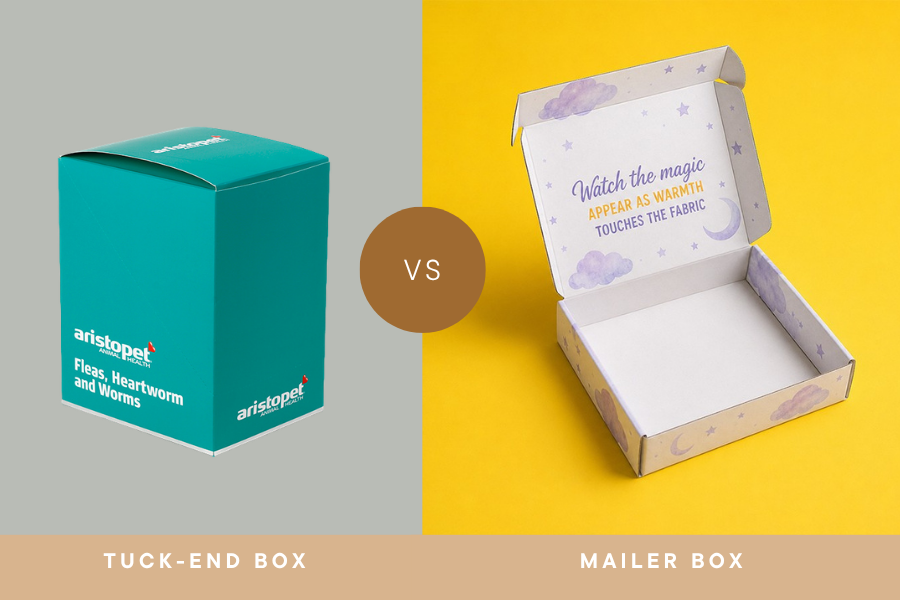
Although both tuck-end boxes and mailer boxes are commonly used for product packaging, they serve different purposes. Mailer boxes prioritize shipping protection and strength, while tuck-end boxes are designed for retail presentation, branding, and lightweight packaging. Their clean appearance, excellent printability, and cost-effective structure make tuck-end boxes a preferred choice for many consumer products.
| Feature | Tuck Box | Mailer Box |
| Material | Thin paperboard (typical folding carton stock) | Corrugated cardboard (E-flute, B-flute, or C-flute) |
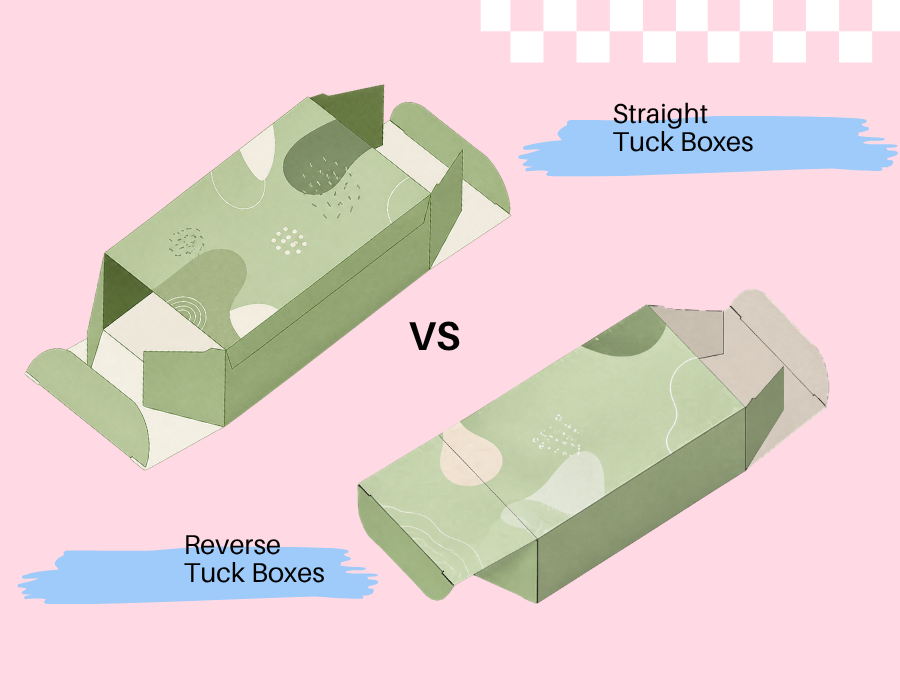
| Closure Type | Tuck flaps (Straight Tuck End or Reverse Tuck End) | Self-locking / front-tuck with interlocking flaps |
| Assembly | Requires gluing at one point; shipped flat | One-piece, no tape or glue needed; tool-free assembly |
| Shipping Protection | Light-duty protection for non-fragile items | Heavy-duty crush-resistant protection for fragile goods |
| Typical Thickness | 0.5mm–1.5mm paperboard | 1.5mm–8mm corrugated board (E/B/C-flute) |
| Market Growth | Reverse tuck box market valued at $2.66B in 2025 (CAGR 3.6%) | Mailer boxes market at $4.4B in 2025 (CAGR 6.7%), over 62% from e-commerce demand |
| Unboxing Experience | Simple open-and-close | Premium front-flip opening creates a surprising moment |
| Stacking Strength | Low to moderate | High; capable of pallet stacking |
| Branding Canvas | Excellent print surface; clean front panel | Large exterior and interior print surfaces available |
*Sources: Foldable mailer box market at 9.3% CAGR driven by sustainable packaging demand; mailer boxes industry to reach $8.4B by 2035 with over 62% of demand from e-commerce; reverse tuck box market at $2.66B valued in 2025 growing at 3.6% CAGR.
2. What Are Tuck Boxes?
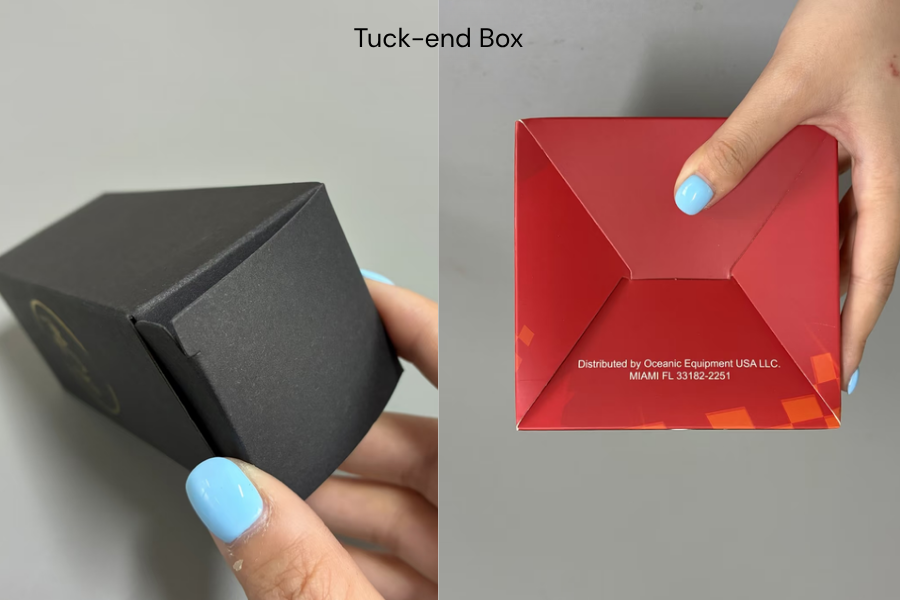
- Cost-Effective for Retail. Tuck boxes are typically more affordable per unit than mailer boxes, making them an excellent choice for high-volume retail applications. Their lightweight paperboard construction keeps material costs low.
- Flat-Packed for Efficient Storage. Because tuck boxes are shipped and stored flat, they occupy minimal warehouse space. This is particularly advantageous for businesses with limited storage capacity.
- Excellent Branding Surface. Tuck box provides an ideal canvas for vibrant custom printing, allowing businesses to create a strong shelf presence with logos, product information, and eye-catching graphics.
- Limited Protection. Their thin paperboard construction offers minimal protection against impacts, crushing, or moisture, making them unsuitable for shipping fragile or high-value items.
- Not Self-Locking. Unlike mailer boxes, tuck boxes typically require glue at one point for assembly. This adds a step to the packaging process and may require machinery for high-volume fulfillment.
- Lower Stacking Strength. Tuck boxes lack the corrugated fluting that provides structural rigidity, so they perform poorly when stacked in pallets or subjected to compression during transit.
3. What Are Mailer Boxes?
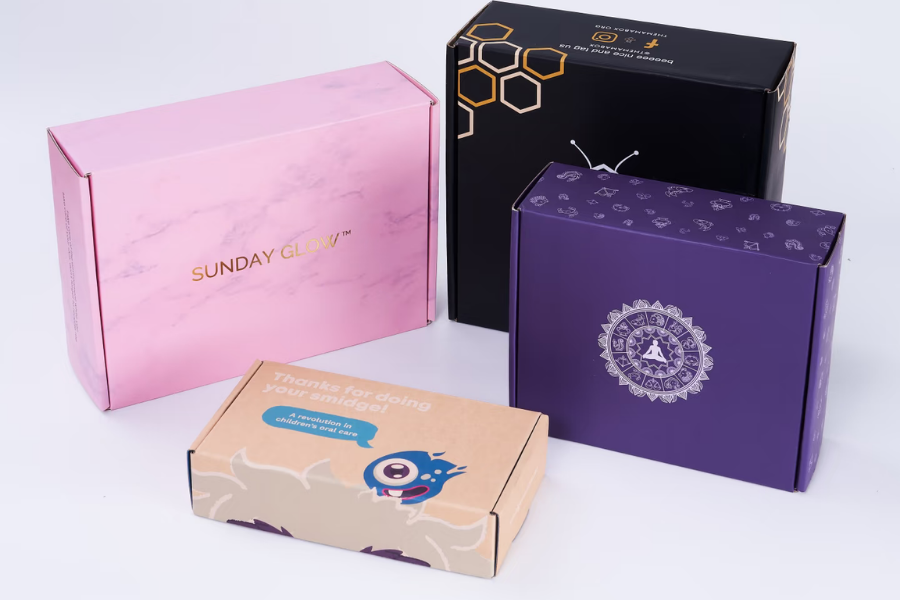
- Superior Protection. Mailer boxes are engineered for shipping. Data from packaging manufacturers indicates that rigid mailer box structures offer 40% greater crush resistance than standard single-layer cardboard.
- No Tape, No Glue Assembly. The self-locking design eliminates the need for tape or glue, reducing packing time and material costs.
- Premium Unboxing Experience. The front-flip opening creates an immediate “wow” factor that transforms a simple delivery into a memorable brand touchpoint.
- Higher Per-Unit Cost. Mailer boxes generally have a higher unit cost than tuck boxes due to their corrugated material and more complex die-cut design.
- Bulkier Shipping to End Customers. While mailer boxes arrive flat-packed to your warehouse, the assembled boxes take up more volume per item than tuck boxes when shipped to end customers.
- Potentially Over-Engineered for Light Products. For very lightweight, non-fragile items (such as a single T-shirt or a small booklet), a mailer box may provide more protection than necessary.
4. Tuck Box vs Mailer Box: Which Is More Durable?
Durability is often the deciding factor when choosing between tuck boxes and mailer boxes. The differences come down to three key areas: material structure and shipping volume.
Material Structure: Paperboard vs Corrugated
Tuck boxes are made from paperboard—a solid sheet material typically used for folding cartons. Paperboard has a clean, smooth surface that prints beautifully but offers minimal structural rigidity.
Mailer boxes are made from corrugated cardboard, which consists of a fluted medium sandwiched between two liner boards. This fluted structure distributes impact forces and resists crushing far more effectively than solid paperboard. Independent data suggests that rigid mailer boxes offer approximately 40% greater crush resistance compared to standard single-layer cardboard options.
Shipping Volume: Flat-Packed Storage
Both tuck boxes and mailer boxes are delivered flat-packed from the manufacturer to your warehouse. In this state, both occupy minimal space per unit, making warehousing costs comparable.
Tuck end boxes are space-efficient and easy to store, making them ideal for retail environments where space is limited. Mailer boxes similarly ship flat to minimize storage space, saving warehousing costs while maintaining their protective advantages when assembled.
5. Which Industries Use Tuck Boxes and Mailer Boxes?
In general, tuck-end boxes dominate retail environments where product presentation and cost efficiency are priorities, while mailer boxes are preferred for e-commerce, subscription services, and direct-to-consumer shipping where protection and customer experience matter most. Below is a table for reference regarding usage scenarios:
| Industry | Tuck End Boxes | Mailer Boxes |
| Cosmetics & Beauty | Retail skincare boxes, makeup packaging, perfume cartons | Subscription beauty boxes, influencer PR kits, and online orders |
| Food & Beverage | Tea boxes, chocolate boxes, and nutrition supplement cartons | Snack subscription boxes, gourmet gift sets, meal kits |
| Pharmaceuticals & Healthcare | Medicine cartons, supplement packaging, healthcare products | Direct-to-consumer wellness kits and healthcare deliveries |
| Electronics | Small accessories, chargers, earphones, cables | Electronic devices requiring extra shipping protection |
| Apparel & Fashion | Socks, ties, accessories, jewelry packaging | Clothing shipments, fashion subscription boxes |
| Publishing & Stationery | Notebooks, journals, card sets, educational products | Book shipments, stationery kits, corporate gift sets |
| Toys & Games | Retail toy packaging, card games, puzzles | Board games, collector’s editions, online toy orders |
| E-commerce Brands | Limited use for outer shipping; often used as inner retail packaging | Primary choice for e-commerce fulfillment and direct-to-consumer shipping |
| Corporate Gifts | Premium product presentation boxes | Gift boxes, onboarding kits, promotional campaigns |
6. Looking for a reliable custom box manufacturer?
Both tuck boxes and mailer boxes have their strengths—but the right choice depends on your product, shipping needs, and brand experience. You don’t have to navigate it alone.
At Xinyi Printing , we specialize in custom paperboard and corrugated packaging solutions for e-commerce and retail brands across the US and Europe. Whether you need high-volume reverse tuck boxes for shelf appeal or durable mailer boxes designed for safe, tape‑free shipping, we deliver quality, competitive pricing, and fast lead times.
Contact us today – and tell us your box type, size, and quantity. Let’s build packaging that protects your products and grows your brand.