
Choosing the right packaging structure is the first decision when developing a product package. Among the many folding carton styles available today, straight tuck boxes and reverse tuck boxes remain two of the most popular choices across industries. From cosmetics and skincare to supplements and retail products, these tuck box styles are widely used for their versatility, cost-effectiveness, and premium presentation.
At first glance, the difference between them may seem minor—simply the direction in which the top and bottom flaps close. So why do luxury brands often prefer a Straight Tuck Box, while many large-volume retail products use Reverse Tuck Boxes? Which option offers better value for your packaging project?
In this guide, we’ll compare Straight Tuck Boxes and Reverse Tuck Boxes in detail, helping you save time and costs to choose the packaging solution.
What Are Straight Tuck Boxes?
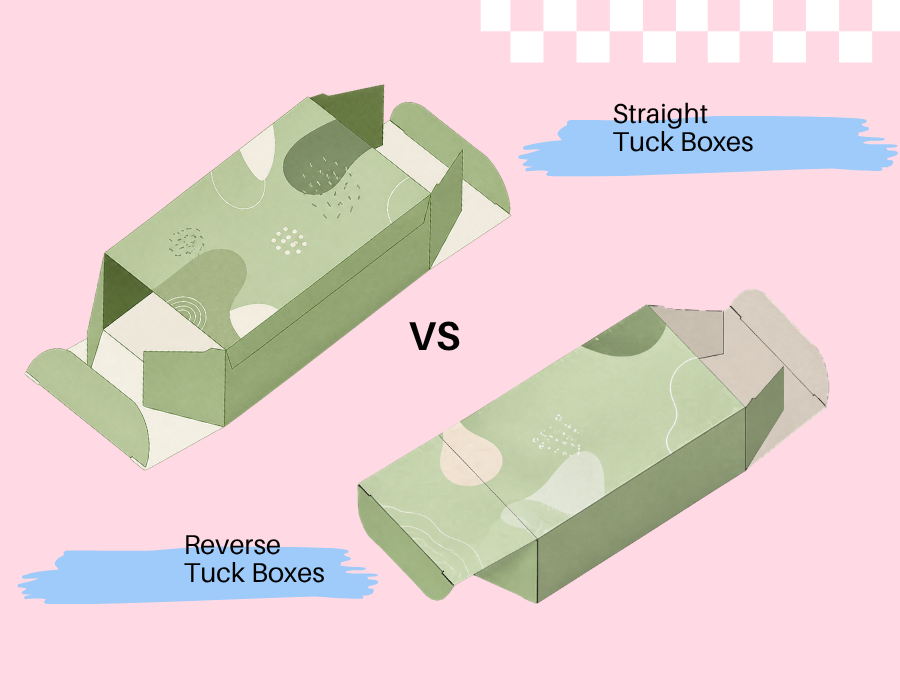
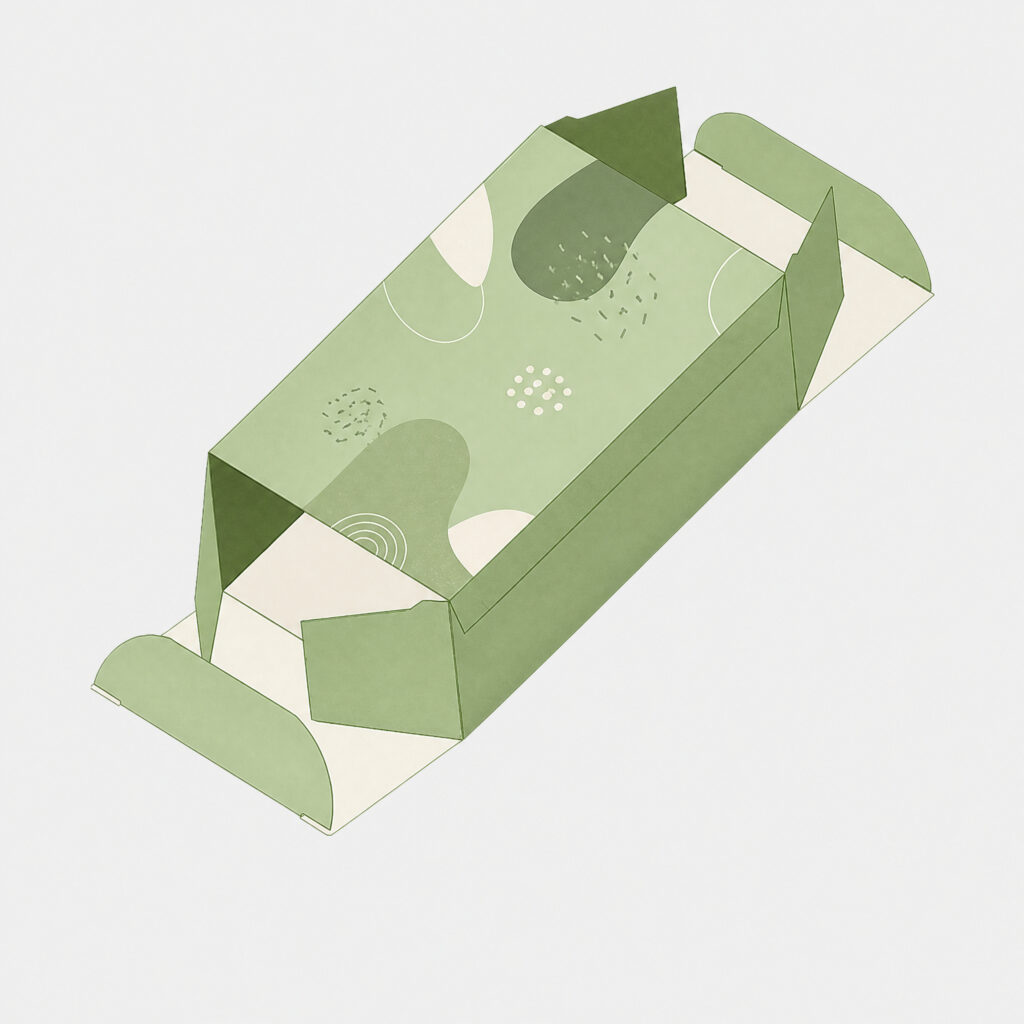
A Straight Tuck Box: When you look at the box, the top flap folds down, and the tuck flap inserts into a slot on the front panel. Both the top and bottom tucks are aligned on the same vertical plane.
What Are Reverse Tuck Boxes?
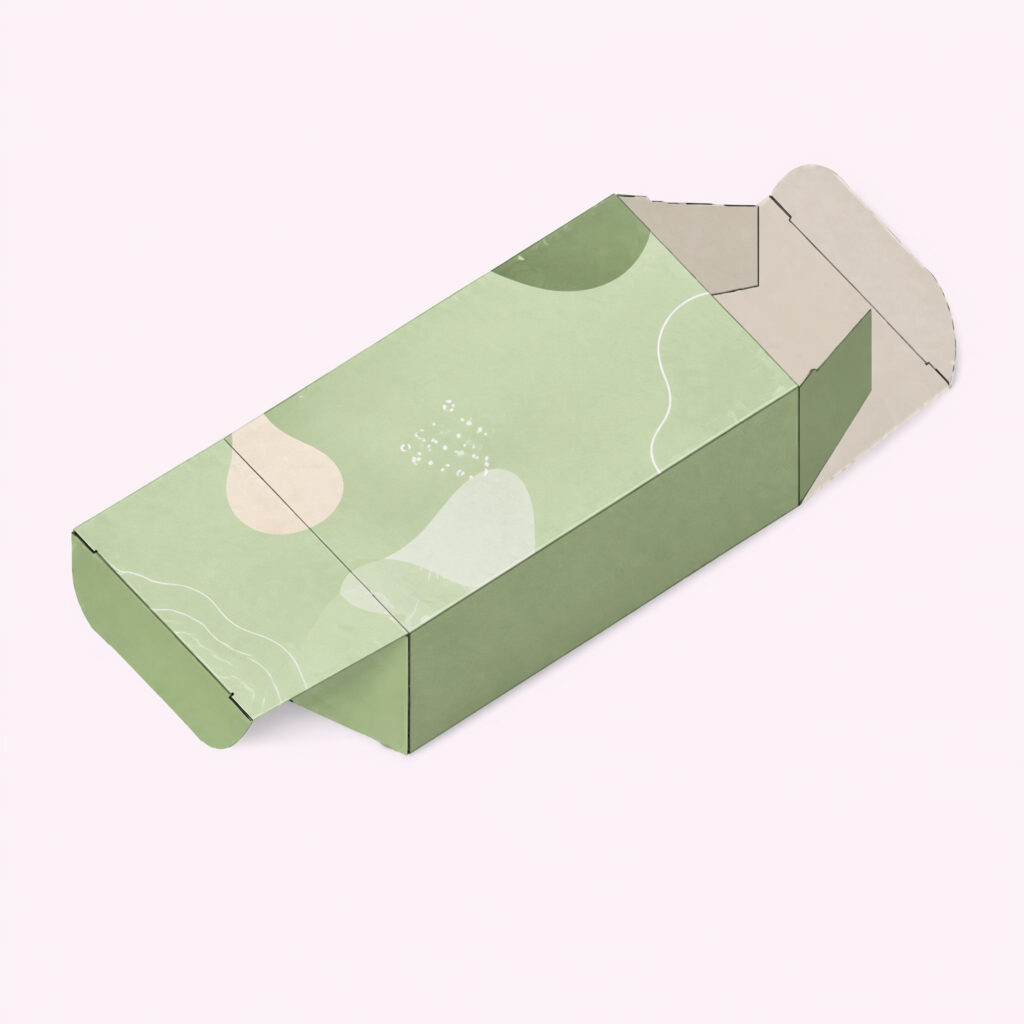
A Reverse Tuck Box: The top tuck flap folds towards the front, but the bottom tuck flap folds towards the back. They are reversed.
Key Differences at a Glance
To understand which box fits your needs, you must look beyond aesthetics. Here is the technical breakdown of Straight Tuck Boxes versus Reverse Tuck Boxes.
| Feature | Straight Tuck Box | Reverse Tuck Box |
| Structure | Tuck flaps on the same side | Tuck flaps on opposite sides |
| Material Usage | Slightly less material required for the same internal volume. | Generally requires a slightly larger blank to achieve the same depth, increasing material costs marginally. |
| Shipping Performance | Weaker resistance. Prone to sliding open under vertical pressure during transit. | Excellent crush resistance. The opposing tucks create a locking mechanism that resists shifting. |
| Assembly | Faster for manual packing; easier for automated filling lines with simple machinery. | Slightly trickier to fold manually, but highly efficient on modern high-speed gluing machines. |
| Best Applications | Lightweight retail items (tea bags, candy bars, small electronics). | Heavy items, subscription boxes, cosmetics, or products requiring robust shipping. |
| Sustainability | Uses less pulp per unit, making it marginally lighter for shipping emissions. | Despite more material, its durability reduces product damage and returns (saving waste). Both are highly compatible with FSC paper. |
Tuck Box Material Options
When specifying materials for straight tuck boxes or reverse tuck boxes, aesthetics are secondary to foldability and rigidity. The wrong paperboard won’t just look bad—it will jam your automated packing lines, fail drop tests, and ruin your unboxing experience.
To ensure your packaging performs globally, you need to understand which substrates engineers love and which ones they reject outright.
The Premium Print Performers - SBS or C1S Paperboard
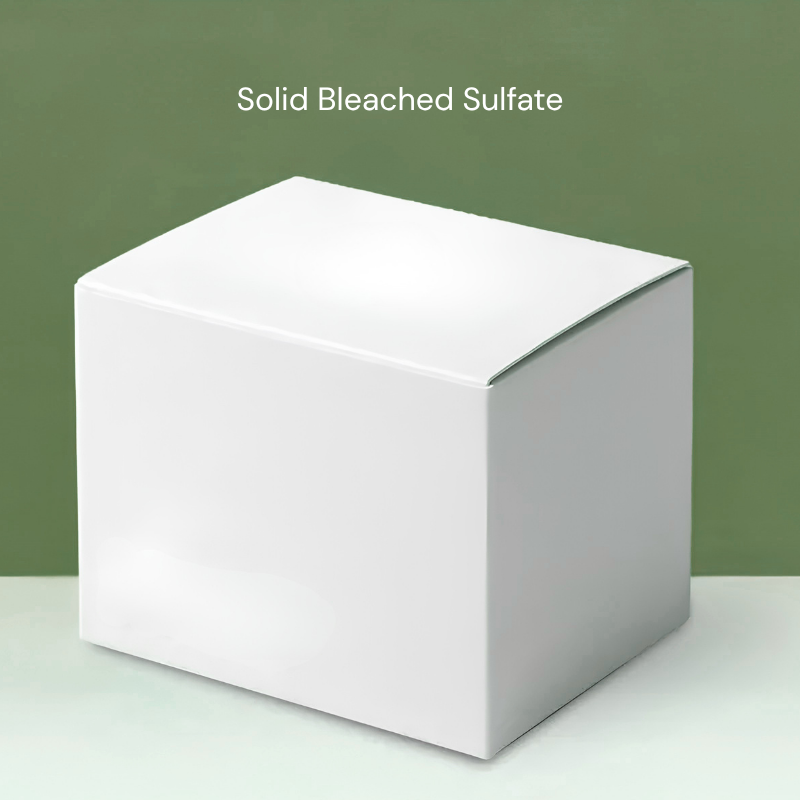
At the top of the quality spectrum sits SBS (Solid Bleached Sulfate) , available in a range of 250 to 400 gsm. This fully bleached virgin board delivers a pristine white surface that produces exceptionally sharp graphics—making it the preferred choice for cosmetics, skincare, and pharmaceutical packaging. When paired with soy ink printing, SBS achieves remarkable color vibrancy with minimal ink absorption.
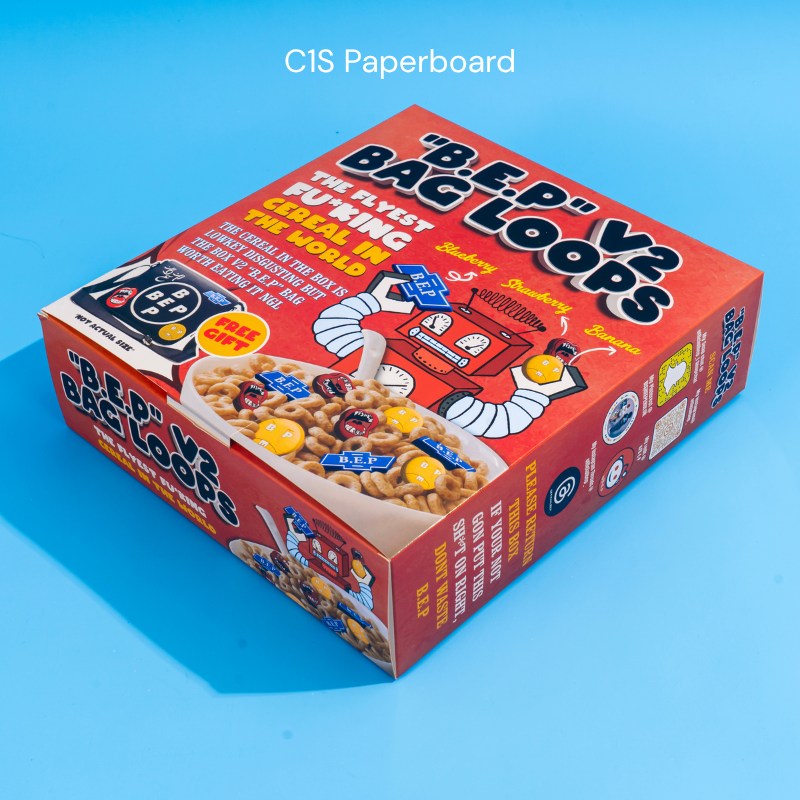
Closely related is C1S Paperboard (250–400 gsm), the true workhorse of the industry. With one coated side for vivid printing and an uncoated reverse, C1S offers a clever functional advantage: the uncoated surface creates just enough friction to keep the tuck flap securely locked in the slot—a critical feature for both straight and reverse tuck boxes. This makes C1S the default choice for food packaging, consumer electronics, and general retail applications where cost-effectiveness meets reliable performance.
The Sustainable and Natural Options - Kraft Board
For brands positioning themselves at the intersection of premium quality and environmental responsibility, White Kraft Board (250–400 gsm) presents a compelling proposition. It retains the natural, long-fiber structure of traditional kraft paper while offering a brighter, more printable surface than its brown counterpart. This bridges the gap between sustainability and visual appeal, making it ideal for eco-conscious brands that refuse to compromise on aesthetics.
The Lightweight European Standard - FBB
FBB (Folding Box Board), specified in the 250–350 gsm range, represents the engineering choice favored across European markets. Its multi-layer construction—featuring a mechanical pulp core sandwiched between bleached outer layers—delivers exceptional bending stiffness at a significantly lighter weight than SBS or C1S of equivalent thickness. This structural efficiency makes FBB particularly well-suited for reverse tuck boxes, where opposing fold directions create lateral tension that demands high rigidity to resist buckling. For luxury retail packaging destined for international shipping, FBB offers an optimal balance of strength, weight, and premium finish.
The Cost-Effective Solution - CCNB
When budget constraints take priority, CCNB (Clay Coated News Back), ranging from 300 to 450 gsm, provides the most economical pathway to a functional tuck box. Its clay-coated printing surface enables acceptable graphic reproduction, while the recycled newsprint backing keeps material costs low. The high stiffness of CCNB at heavier grammages makes it suitable for cost-sensitive packaging applications where the interior of the box remains hidden from the consumer. It is worth noting, however, that the grey or brown reverse side becomes visible when the box is opened—so this material is best reserved for single-use retail packaging or inner cartons where aesthetic consistency is less critical.
The Heavy-Duty Protector - Corrugated E-flute
For products that demand exceptional protection, Corrugated E-flute (available in 1–1.5 mm thickness) offers the durability of corrugated board while remaining printable and convertible on standard folding equipment. This material excels at protecting heavy items—such as glass bottles, tools, or large electronics—during international shipping. However, corrugated board behaves differently from solid paperboard: its fluted structure creates “memory” that can cause the box to spring back after folding. To achieve clean, consistent folds on straight or reverse tuck boxes made from E-flute, manufacturers must use deeper creasing scores and more precise die-cutting.
Materials NOT Recommended for Tuck Boxes
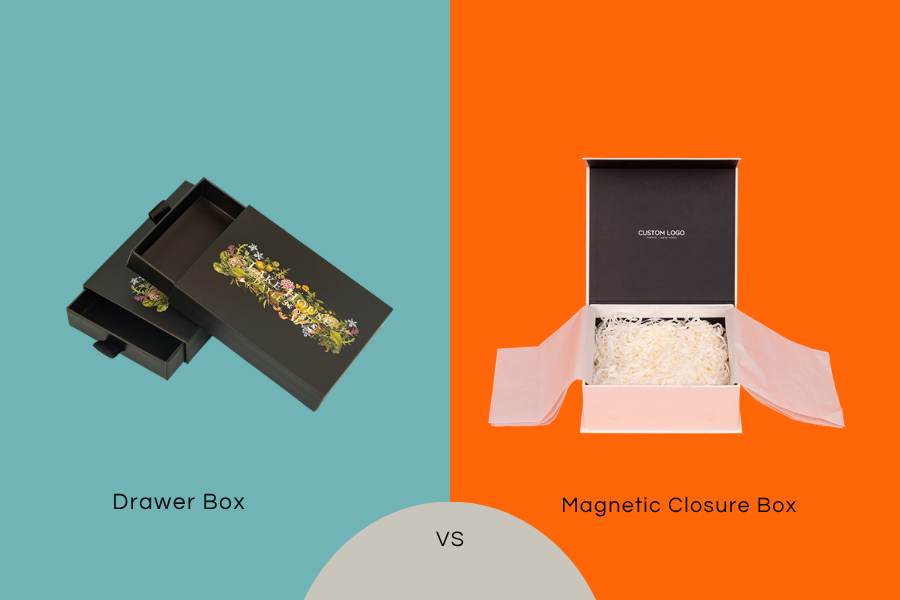
Not every paperboard is suitable for the precise folding requirements of straight tuck boxes and reverse tuck boxes. Greyboard, for instance, is a fatal flaw—its excessive thickness and rigid structure make it impossible to fold cleanly, which is precisely why it belongs on rigid boxes and magnetic closure boxes rather than tuck-end cartons. Similarly, chipboard should be avoided at all costs; while it comes cheap, its poor printability, tendency to delaminate at the crease, and rough edges make it virtually unseen on retail shelves in markets. Thick corrugated boards like B-flute and C-flute also fail miserably—their bulky flutes prevent the tuck flap from locking properly, produce coarse, unsightly fold lines, and lack the refined finish expected of retail packaging.
A common mistake is using art paper alone—some clients request 157 gsm art paper expecting a functional box, but the reality is that such thin, unsupported paper is far too soft; it must be laminated to white board, grey board, or corrugated to hold any shape. Finally, any paper below 200 gsm—whether 128 gsm, 157 gsm, or 180 gsm—is structurally inadequate for tuck boxes, prone to warping, crushing under stacking pressure, and popping open at the glue joints, making them virtually unusable for any serious packaging application. Selecting any of these materials for your tuck box project will almost certainly result in production failures, compromised product protection, and a disappointing unboxing experience that undermines your brand value.
Which Tuck Box Is More Cost-Effective?
Cost is a balance of material and risk.
- Straight Tuck Boxes: Lower initial cost. They use about 8-10% less paperboard to create the same size box because the design is more efficient for the die-cutter. This makes them highly cost-effective for retail displays where they will not be stacked high.
- Reverse Tuck Boxes: Higher initial material cost due to the larger blank size. However, they are more cost-effective over the “Total Supply Chain” . By reducing product damage and insurance claims, the reverse tuck box often saves money in the long run.
How to Choose Between Straight and Reverse Tuck Boxes?
Choosing the right style is about matching the box to the product’s lifecycle. Use this decision table to guide your purchase.
| Factor | Recommended Choice |
| Product Weight | > 1 kg → Reverse Tuck Box < 200g → Straight Tuck Box |
| Shipping Distance | Long Distance (Overseas) → Reverse Tuck Box |
| Retail Display | Shelf-Stacked → Straight Tuck Box |
| Automated Packing | High-Speed Lines → Straight Tuck Box |
| Sustainability Goal | Reducing Carbon Footprint → Straight Tuck Box |
| Premium Unboxing | Luxury Feel → Reverse Tuck Box |
| Wet/Humid Climates | Reverse Tuck Box |
There is no one-size-fits-all answer, but the rule of thumb is simple:
Choose a Straight Tuck Box if your priority is cost-reduction and lightweight packaging for in-store retail. It uses less FSC paper, reduces your baseline material costs, and is highly recyclable.
Choose a Reverse Tuck Box if your priority is e-commerce durability and product safety. The extra material investment pays for itself by protecting your brand reputation and reducing shipping damage claims.
Whichever style you choose, ensure you are partnering with a supplier who offers FSC paper, utilizes soy ink printing, and prioritizes sustainable materials. In the modern packaging landscape, the choice between straight and reverse is less about right or wrong, and more about matching the box to the journey of your product.
If you’re still unsure whether to choose high-gloss SBS paper for premium cosmetics or more affordable C1S paper for bulk retail, our team can guide you through the entire process.
We offer free material samples and structural design consultations, and provide rapid customized quotes based on your product weight, shipping distance, and sustainability goals. We also fully support soy-based ink printing and recyclable coatings.
Contact us today for a free consultation to learn how the right paper boxes can enhance your brand experience and reduce supply chain costs.